Safety Tips for Solo Travelers in the Philippines
Introduction & Pre-Trip Preparation
Stepping into the dense, emerald canopy surrounding Inambakan Falls feels like crossing a physical threshold into another world. The roar of cascading water drowns out the persistent mechanical hum of modern life, leaving only the raw, unfiltered energy of the jungle. Solo travelers flock to South Cebu to chase these remote limestone cascades, drawn by a potent mix of intense natural beauty and the well-earned reputation of the Philippines as a highly accommodating destination for independent explorers. Preparing for this specific environment requires a deliberate shift in mindset. You are leaving the heavily manicured tourist corridors of Cebu City behind and entering rugged, rural terrain.
“To travel alone in the remote barangays of Cebu is to embrace the protective community around you—you are solo, but you are never truly alone.”
Your safety net begins long before you board a flight to Mactan-Cebu International Airport. Establishing a solid baseline of geographical awareness prevents minor hiccups from escalating into genuine crises. Consult the official US State Department Travel Advisory for the Philippines to understand the broader regional safety context. South Cebu remains a historically stable and secure area for foreign visitors, entirely removed from the geopolitical complexities affecting other distant island provinces. Always share your daily itinerary with someone back home so they know exactly what region you are heading to.
Health & Hydration in the Tropics
The Philippine sun dictates the rhythm of daily life in the provinces. Midday temperatures routinely spike between 30°C and 34°C (86°F–93°F), accompanied by aggressive humidity levels that wrap around your body like a heavy, damp blanket. Trekking up the steep, unpaved dirt trails to the upper tiers of Inambakan demands immense physical exertion. Familiarize yourself with the Philippine Department of Health (DOH) guidelines on heat exhaustion. Recognizing the early physiological signs—dizziness, excessive sweating, and a rapid, fluttering pulse—can save your life. Take frequent breaks under the shade of the bamboo groves lining the riverbank. Push your pride aside and rest when your body signals fatigue.
Rural municipalities like Ginatilan rely on deep local water tables and natural mountain springs. This water is perfectly fine for lifelong residents but will almost certainly wreak havoc on foreign digestive systems unaccustomed to the local microbial flora. Stick exclusively to bottled or mechanically purified water. You will find dozens of small wooden sari-sari convenience stores lining the concrete road leading to the jump-off point, selling sealed plastic bottles. Buy significantly more water than you think you need. Dehydration compounds the effects of heat fatigue rapidly, making the hike back down the canyon unnecessarily brutal.
Daily Cash Needs in Rural Cebu (PHP)
The “Cash is King” rule governs every transaction outside of the major metropolitan centers. There are absolutely zero reliable international ATMs in the mountain barangays of Ginatilan. Digital payment platforms like GCash dominate the local economy, but they require a stable internet connection—a luxury that disappears the moment you enter the jungle. You must withdraw everything you need in Cebu City, Moalboal, or Oslob before moving south. Break your large 1,000 PHP bills at 7-Eleven stores or pharmacies while you are still in a major hub. A habal-habal driver transporting you up the mountain will not have change for a large note, creating immense friction before your trip even begins.
| Essential Expense | Estimated Cost (PHP) | Crucial Notes for Solo Travelers |
|---|---|---|
| Habal-Habal (Motorcycle Taxi) | 50 – 100 per way | Requires exact change in 20s and 50s. Negotiate the return trip pickup time in advance. |
| Bottled Drinking Water | 15 – 30 per bottle | Purchase at sari-sari stores before the trail begins. Carry at least 1.5 liters. |
| Entrance & Environmental Fees | 50 – 100 | Mandatory municipal fee. See Tickets & Tours for current pricing structures. |
| Local Guide Gratuity | 100 – 300 | Guides are optional. Tipping is highly encouraged for excellent navigation and photography help. |
Connectivity & Navigating Transport
Cellular towers struggle to penetrate the deep, winding limestone ravines of the Ginatilan watershed. Expect your mobile signal to drop to zero the exact moment your motorcycle turns off the paved coastal highway and begins the steep, winding ascent into the forested mountains. Both major local networks experience significant dead zones here, a harsh reality accurately reflected on the official Globe network coverage maps. Download your offline maps and cache any translation apps before leaving your coastal accommodation. Establish a designated pickup time with your driver before he leaves you at the entrance desk.
Mastering local transit transforms a daunting logistical nightmare into an empowering solo adventure. The habal-habal drivers waiting at the Ginatilan town center act as your primary lifeline to the falls. Understanding how to negotiate these fares, identify safe drivers, and demand a helmet is a critical survival skill. Read our comprehensive breakdown on Navigating Public Transport in Rural Cebu to build your confidence before flagging a ride. For exact routing directions from major transit hubs like Moalboal, Cebu City, or Dumaguete, consult our highly detailed How to get to Inambakan Falls guide.
South Cebu Terrain Map
Avoiding Scams & Securing Belongings
The vast majority of Cebuanos are fiercely protective of their regional guests, taking immense personal pride in showing off their home province. Instances of malicious theft or violent crime against solo travelers are incredibly rare. You are far more likely to encounter the frustrating “tourist tax”—a sudden, arbitrary inflation of transport prices aimed at foreigners. Always agree on your habal-habal fare before swinging your leg over the motorcycle. At the falls, you have the option to hire a local guide at the entrance. While not mandatory, it is highly recommended as it runs on a pay-as-you-feel system that directly supports the community, and guides provide valuable assistance for safe cliff jumping and navigating the upper tiers.
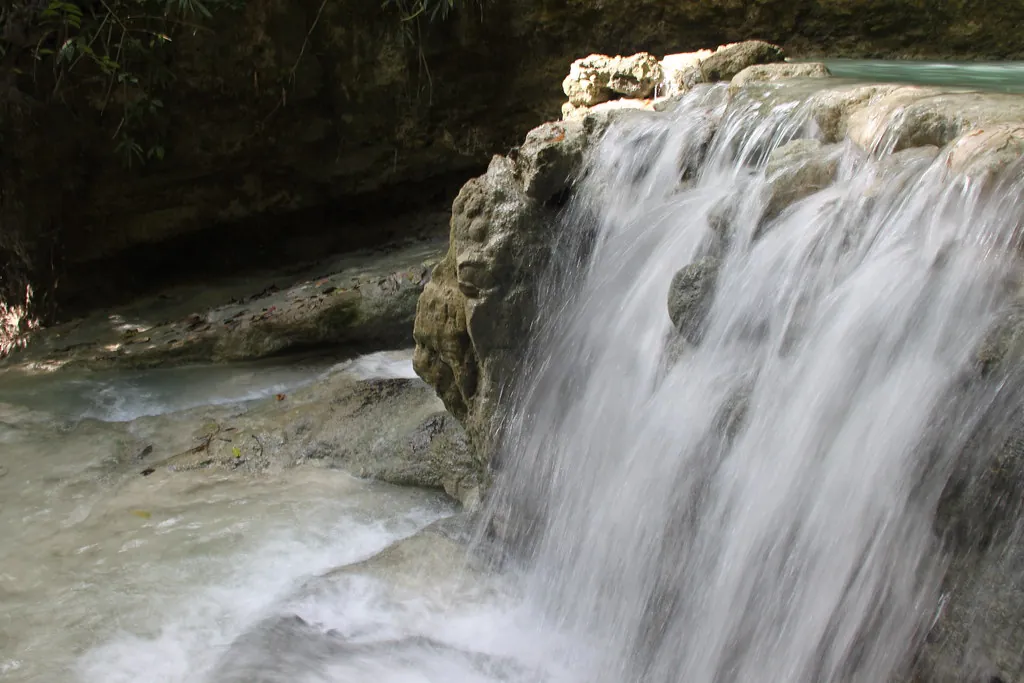
Water presents the most immediate threat to your electronics. The aggressive mist from the 100-foot main cascade penetrates standard canvas backpacks with terrifying ease. A high-quality PVC dry bag (often sold locally as an “ocean pack”) is non-negotiable for protecting your phone, wallet, and camera equipment while you swim. When leaving your bag on the rocky banks to explore the higher tiers, ask your local guide to keep a watchful eye on it. If managing these logistics feels overwhelming for a single day, booking a guided whale shark watching and Kawasan Falls canyoneering tour seamlessly handles the rural transport, secure gear storage, and expert navigation in one clean package. You can also connect your trip to nearby attractions like Aguinid Falls without the stress of haggling with multiple drivers.
Water & Trekking Safety
Navigating the slick, moss-covered boulders surrounding the plunge pools requires hyper-vigilance. The wet limestone trails defining the multi-level cascades of Inambakan become incredibly treacherous after a brief afternoon rain shower. Wear appropriate water shoes equipped with an aggressive rubber tread. Flimsy flip-flops will snap under the pressure of the mud, leaving you entirely barefoot on jagged, unforgiving rock formations.
Weather systems in the tropics turn violently without any prior warning. A clear, cloudless morning sky guarantees absolutely nothing about the afternoon conditions. Sudden flash floods originating miles higher up the mountain can swell the river in a matter of minutes, turning tranquil blue swimming holes into raging, opaque brown torrents. Always check the official PAGASA weather forecasts for heavy rainfall warnings in the Central Visayas region before setting out from your hotel. Never strip off your rented life vest, even if you consider yourself an Olympic-level swimmer. The downward force and invisible undercurrents near the base of the main drop are deceptively powerful and have caught many confident tourists off guard. For a complete breakdown of what is and isn’t allowed during your jungle trek, rigorously review our strict Visitor Rules & Guidelines.